Engraving FONTS For more than 40 years, problems with engraving fonts
have remained unresolved. For more than 20 years, we have been
writing about these problems
on the Engraving PORTAL.
For almost 20 years, I have been running Engraving Portal.
I have received thousands of emails from engravers:
Which machine is better — Gravograph or Roland?
Should I buy a 20W or 30W laser?
Where can I find a belt for a Deckel G1L?
And so on. But nobody has ever asked me
about an engraving font.
Nobody asked for CNC font editor.
Nobody asked where to find good engraving literature.
Not once. And that is strange.
We are willing to spend thousands on a machine,
hours comparing lasers,
and days searching for a replacement part.
But almost nobody seems interested in the
letters being engraved.
I actually tried to do something about that.
I developed Orach Technic Pro,
a font specifically designed for engraving.
And yet, almost nobody even wants to look at it.
Maybe the problem isn't the machine.
Maybe the problem is that we have forgotten
that engraving is a craft — not just a machine.
Maybe we have forgotten that the
foundation of engraving is the letter.
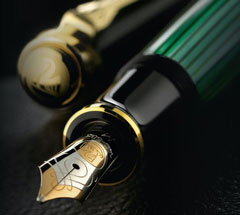
What good is the finest Pelikan fountain pen
if the person using it has poor handwriting?
The problem is now solved. Orach Technic Pro 7.22 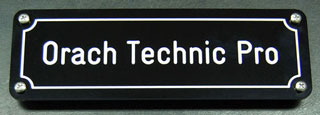
The result of this work is Orach Technic Pro,
a professional multilingual and multi-technical
font for engraving,
developed from the very beginning specifically for engraving. It was created for the real needs of engraving technology:
CNC engraving, laser engraving,
technical marking and industrial applications . Orach Technic Pro was developed with engraving in mind from
the very beginning. Its character design, proportions, spacing
and special symbols have been continuously tested and
corrected through actual engraving work. Orach Technic Pro has been developed and produced by
infoFORM, Belgrade, Serbia, from 1988 to 2026. The font supports more than 140 Windows keyboard layouts
and more than 215 languages.
In addition it can be used to write more than 1,600 languages. The complete Orach Technic Pro project, including all characters, languages, keyboards, technical information and examples.
www.design.rs
* * *
THE PROBLEMS WE DESCRIBE
MORE THAN 20 YEARS AGO
The following is the original text describing the problems
we encountered with engraving fonts.
---
Engraving fonts should be a precise matter for every good engraving house, a reflection of its technology and a demonstration of its capabilities.
We believe that solving the problems with fonts would considerably increase the quality and productivity of engraving machines, laser systems, and engraving software.
Important about engraving fonts
The Director of an old typographical house, in an article about the culture of writing, wrote:
“The best measure of a typographical house is its font. The best insight into the quality of a printing firm can be gained by looking at its archive of fonts. A person’s font is also an excellent measure of their culture.
A literate person has legible handwriting; an illiterate person leaves a thumb mark.”
On the basis of the above, the following conclusion can easily be made, also for engraving houses: If the engraving house of Friedrich Deckel had good fonts, then it surely had good engraving machines. Engraving fonts should be a matter of prestige for each engraving house, a reflection and a mirror of its own technology.
Possibly, because of the enormous energy that producers have spent on technology and software during the last decade, they have had no strength left for the development of fonts, or perhaps they believe that somebody else should do it.
Perhaps this work really should be done by somebody else, for example, by the Association of Users of Engraving and Laser Systems of the World. Imagine the world of graphics without the standard TrueType and Type 1 fonts.
By individually analyzing each group of shortcomings, we will generally try, on one page, to demonstrate the problems and provide several possible solutions.
We are convinced that by solving these problems with fonts, the production of engraving machines, laser systems, and engraving software would be substantially improved.
Lack of a Standardized Engraving Font Format
In the engraving world, which exists first of all because of engraving letters, fonts—or, more precisely, font formats—are not standardized.
Each producer of engraving machines, laser systems, or independent engraving software has its own font formats, so that fonts cannot be used interchangeably.
Many engravers and users who have experienced these problems in practice leave this field and no longer appear at producers as buyers of newer and more expensive models.
Buyers from other countries who cannot see their letters at the producer’s premises, when they are offered a new machine, do not even consider buying it.
Engravers need a new engraving font format: .eff
An unforeseeably long time would be needed for producers to agree and develop new programs for a new engraving font format, .eff. Therefore, we suggest another possible solution to this problem.
A new standardized, simple .txt file would be created for each character individually. A group of .txt files in one folder, together with an information file and a text kerning table, would constitute an archival standardized engraving font.
Each producer would create its own small compiler, which would compile each archival font into its own font format. Each user of its machines would then be a potential buyer, and would gladly purchase such a compiler as a special software module.
By compiling already existing fonts into the archival format, producers who have a good selection of fonts could offer their fonts to the entire engraving world, rather than, as today, only to buyers of their machines.
Such a solution would not require any changes to the existing engraving programs, so we believe that it would be the simplest and easiest solution to accept.
Lack of engraving fonts-editors
Software houses with their own Engraving fonts editors could supplement their fonts editors with Import and Export of a new archival .txt file and, in that way, make a fast entry into this big and perspective market.
Supplement suggestion of Engraving fonts editors
for the archival .txt file
The existing editors need to be completed with the possibility of Import and Export of the archival .txt file.
Such examples already exist in practice and could be immediately applied.
With File/Import Engraving .txt, selected files would be imported. This Import could directly enable the import of complete archival fonts, or just individual characters, and their compilation into the own font format.
File/Export Engraving .txt would export selected archival files or the whole archival font.
The number of possible characters should be expanded to at least 1,000.
infoFORM will soon be ready to suggest archival numbers from its list "ALL CHARACTERS OF THE WORLD", so that the number of characters in the .txt files could be harmonized.
Lack of multi-lingual engraving fonts
We talked with engravers from several countries around the world, trying to listen to them and understand their needs. Almost nobody from countries that do not use the Latin alphabet asked us about servo machines, but only about fonts. They sent us examples of letterforms that they considered correct and wanted to see whether the machine could engrave them properly. When they saw that the machine could write in that way, they would buy it, while the letters offered to them together with the machine could in no way be accepted as something they should be forced to work with.
We would like to explain this in another way, roughly statistically:
80% of world production belongs to Germany, America, England and France, and these four countries together represent
less than 20% of the total world population, or, in other words,
80% of the world's population is not from the countries where the machines are produced.
In the countries of the machine producers, around 100 characters are used in their writing systems, while the rest of the world uses thousands of letters.
Manufacturers do not have to produce all of these themselves, but they should provide the possibility for users to create them themselves in the format their machines use for engraving. Otherwise, these engraving machines are USELESS for other world markets.
How can an engraver engrave a company sign in several languages in the age of the Internet without it looking as though three different engravers made it?
Multi-lingual engraving font Orach Technic 1L
Lack of good graphic-technical engraving fonts
y good engraving font, we mean engraving fonts that fully follow the shape and format of quality graphic fonts, with deviations only where necessary due to the radius of the tool.
We had the opportunity to see engraving programs that offer several dozen engraving fonts as part of their packages, but among them were not the best representatives of the fonts from the seven largest typographical houses.
Good graphic fonts from the “Big Seven” and more than 10 other major typographical houses represent the basis of writing in the world of graphics and, in terms of their graphic form, are far ahead of the world of engraving.
By good technical font, we mean engraving fonts with small overlaps, interventions made in the same direction where necessary, and good optimization.
Old engraving houses that had mechanical machines and sets of engraving models in their production have an advantage because of their existing experience in compiling fonts. This can easily be noticed from the appearance of the fonts they offer.
The most significant lack of engraving fonts exists precisely in the world of laser engraving, where the technology has advanced the furthest. It can freely be said: technically perfect — graphically for beginners.
The truth is that lasers with galvanic heads, at “the speed of light,” can write more than 1,000 characters per second, but they would still write better with good graphic-technical engraving fonts, and often twice as fast.
“Our programs can use TrueType and Type 1 fonts” — and this is a confirmed way for manufacturers of our new machines to shift the subject from fonts to technology.
Every engraving house should not have only a large number of fonts, but also quality graphic-technical fonts that can fully utilize the capabilities of modern technology.
1L Engraving fonts, Engraving font editor, Orach engraving font,
Font for engraving, One line engraving fonts, Single line engraving fonts
A design or text engraved on a material.
Engraving is proces carving of letters or design into materials.
Engraving methods: 3D engraving, CNC engraving, Laser engraving, Cylindrical Engraving, Deep Engraving, Diamond engraving, Dot pen engraving, Drag Engraving, Hend engraving, Ring Engraving, Roll engraving, Rotary Engraving, Rotogravure.
Engraving product: Awards, Badges, Door Signs, Gun, Gifts, Jewelry, Key Tags, Knife, Medals, Memorial plaques, Mold, Name Plates, Pens, Pet & ID Tags, Picture, Plaques, Ring, Sculptures, Signs, Stamps, Technical Plates, Tools, Trophy Plates.
* * *
All data on www.e-engraving.com is listed without any favoring.
We are not responsible in case any information is invalid or missing.
|


